World Migratory Bird Day 2026

Tomorrow, May 9th, is World Migratory Bird Day. It started in 1993 as a Smithsonian Migratory Bird Center initiative, picked up UN backing in 2006, and is now observed in over 100 countries. The premise is simple: billions of birds move across hemispheres twice a year, and most people never think about it.

This year’s theme is Every Bird Counts – Your Observations Matter — a nod to citizen science and the reality that eBird checklists from backyard birders actually matter to the people tracking population trends. Here in Lassen County California, I don’t need a study to tell me when migration is happening. I just have to look up.

I figure today is a good day to share some images of migratory birds that frequent this area. Note that all images here will be migratory birds I see locally, but the images may be from outside my local area.


We have a few thrush species in this area, all of which I consider to be harbingers of spring when they arrive. The most common is the American Robin,….
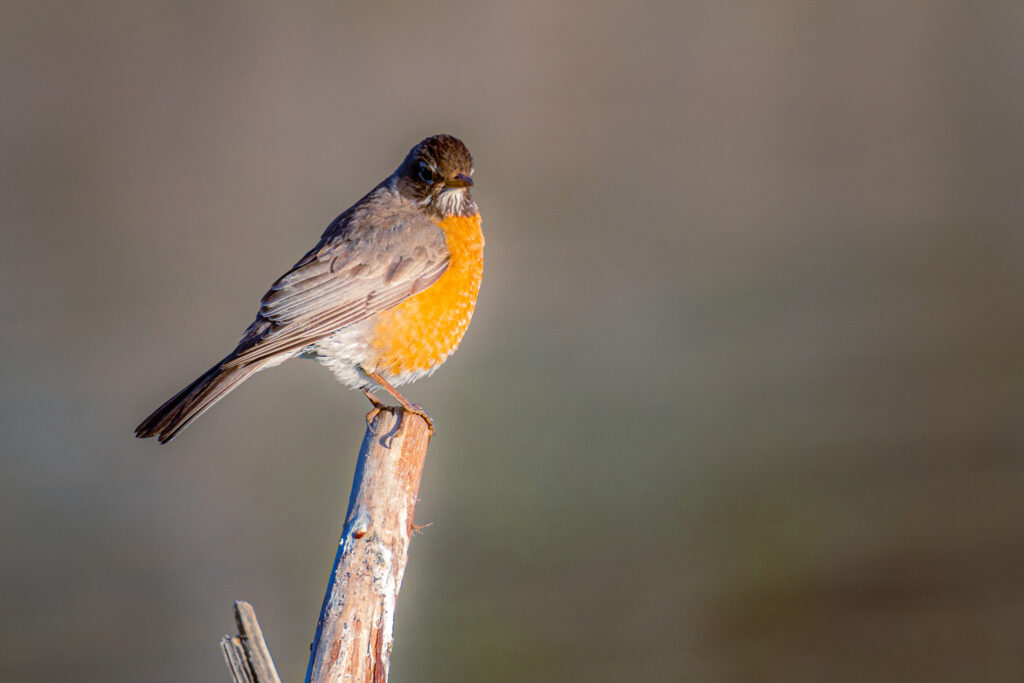
Female American Robin perched on a narrow weathered branch, shown in crisp detail against a smooth, warm-toned background. The bird’s orange breast glows in soft morning light, while subtle browns and grays in her feathers reveal fine texture and layering. She faces slightly toward the camera with an alert expression, catching the low sun that highlights her eye and the curve of her beak. Gentle bokeh isolates the subject, creating a clean, minimalist composition that emphasizes the robin’s colors, posture, and the serene atmosphere of a quiet morning at Baum Lake in Shasta County, California.

…….followed by the western bluebird…
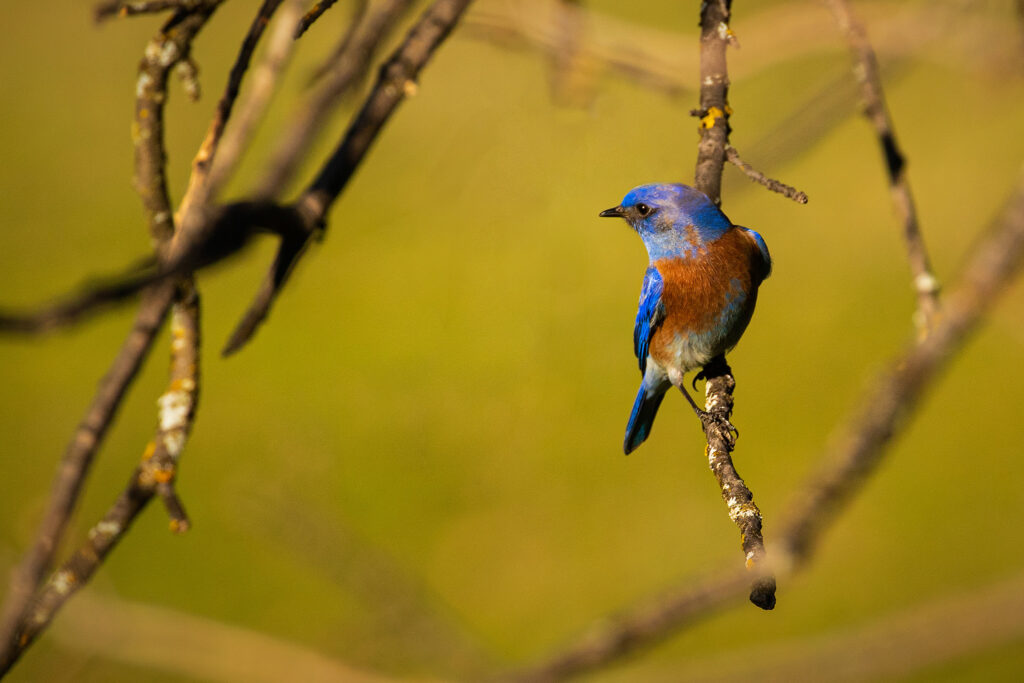
A male western bluebird perched on a bare oak branch in Redding, California, its vivid blue head and wings contrasting with its warm rust-colored breast. The bird faces right, alert and watching the grassy ground below for insects or grubs. Soft, warm light gives the scene a springlike feel despite the winter season, while the blurred green background isolates the bluebird and the textured oak limbs, emphasizing its colors and its poised, searching posture.

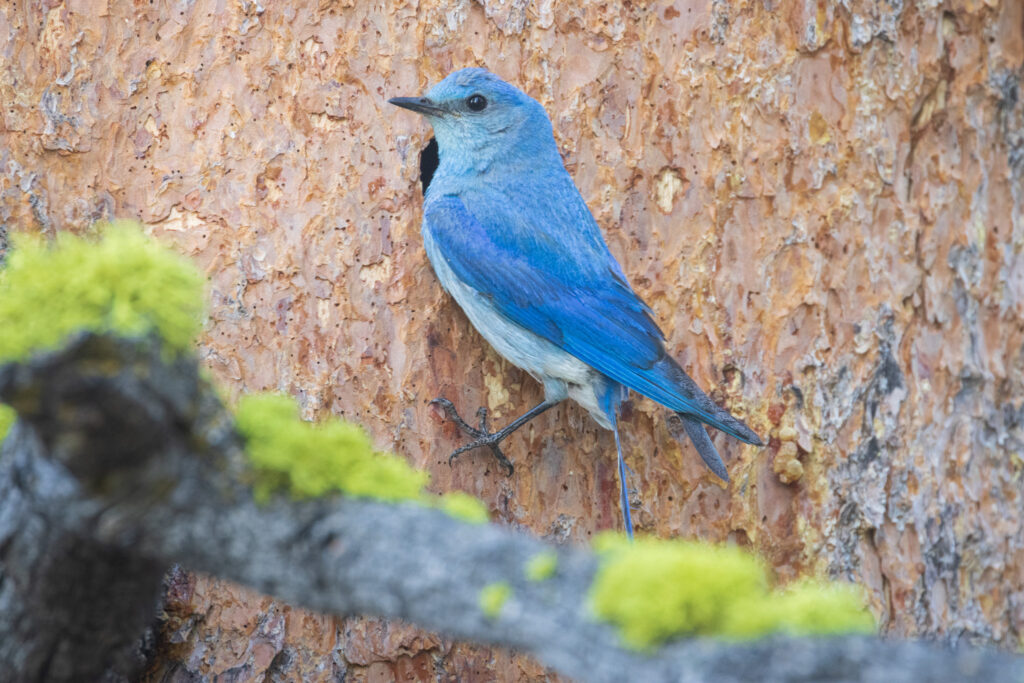
….and the mountain bluebird….

A male mountain bluebird clings to the trunk of a white pine, his vivid blue plumage standing out against the rough, textured bark. He faces left with wings folded, gripping the vertical surface near a small woodpecker-made cavity that he and his mate appear to be scouting as a potential nest site. Soft foreground moss adds a touch of bright green, while the muted tones of the pine emphasize the bird’s saturated blues. The scene conveys a quiet, high-elevation woodland moment in the Sierra Nevada, capturing the behavior and natural habitat of this striking songbird.

In fall and early spring we get large flocks of snow geese moving through…
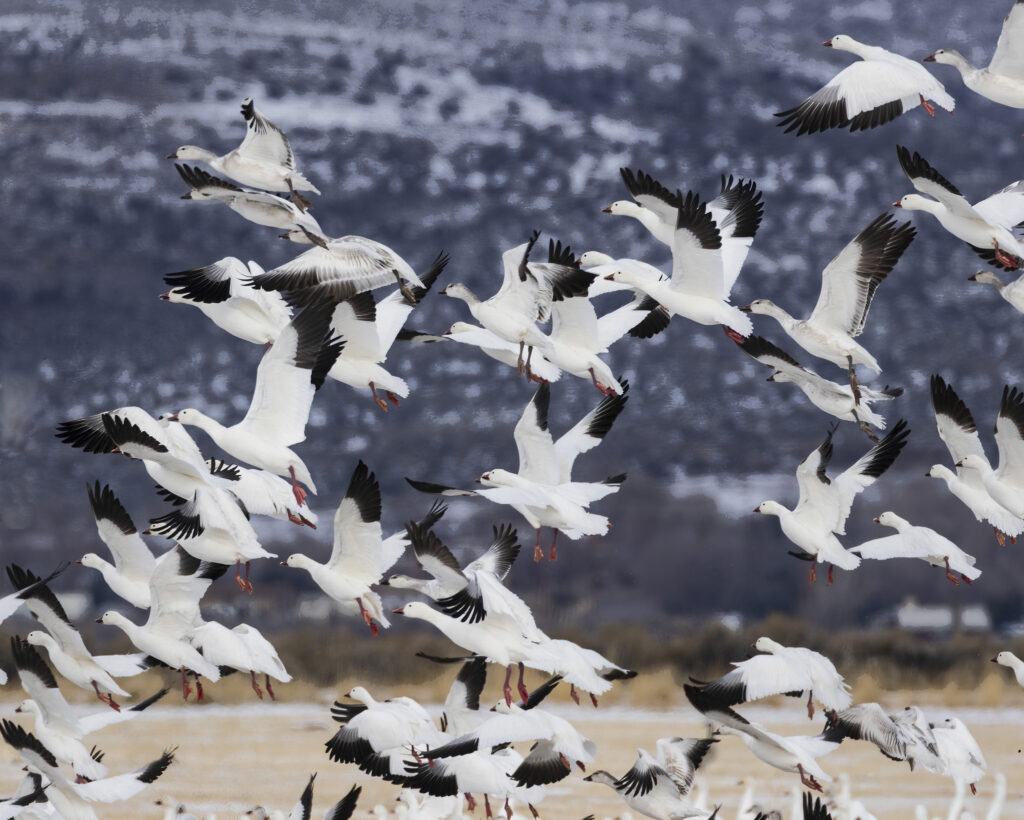
A dense flock of snow geese lifts into the air in synchronized motion above a wintery landscape in Lassen County, California. The birds’ white bodies and black wingtips create a pattern of contrast as they rise in layered groups, wings extended in various stages of flight. Some geese appear close and sharply detailed while others overlap in mid-air, forming a dynamic, swirling composition against a muted background of snow-speckled hills. The scene conveys the energy, movement, and seasonal migration behavior of these large flocks common near Honey Lake.

Northern pintails (“bull sprig” in duck hunter parlance) are common migratory ducks in this area…
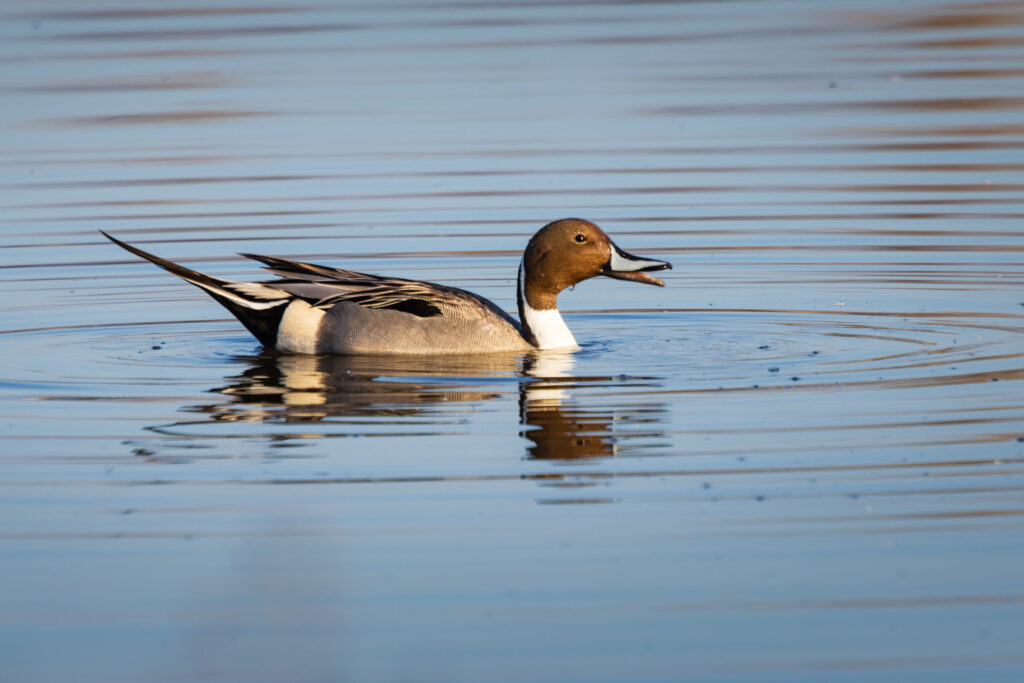
Northern pintail drake (Anas acuta) swimming at Sacramento National Wildlife Refuge, California, January morning

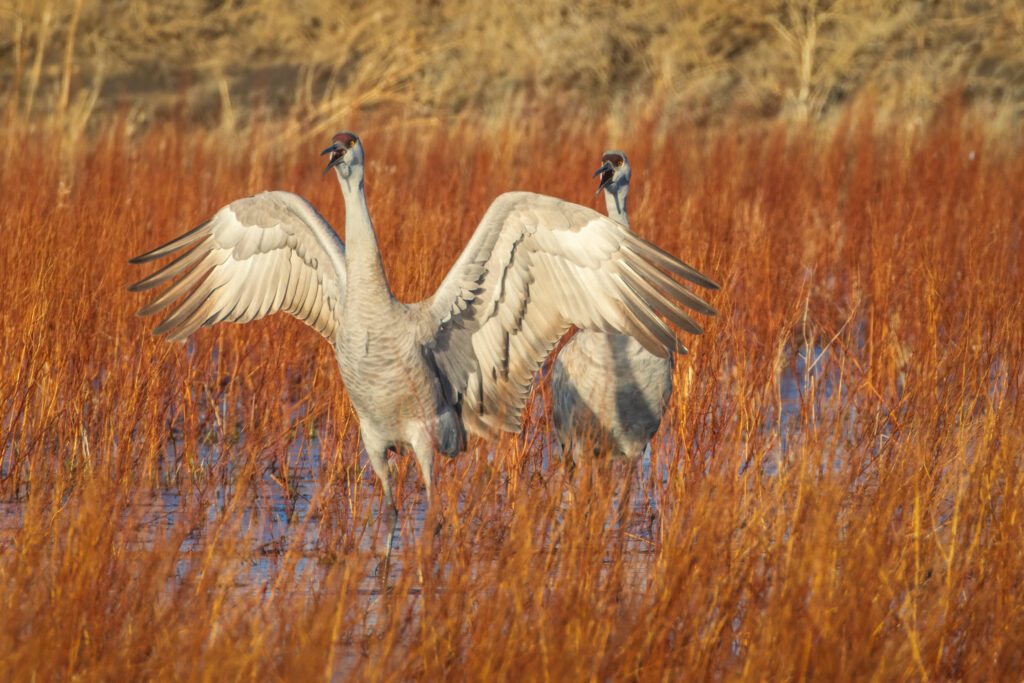
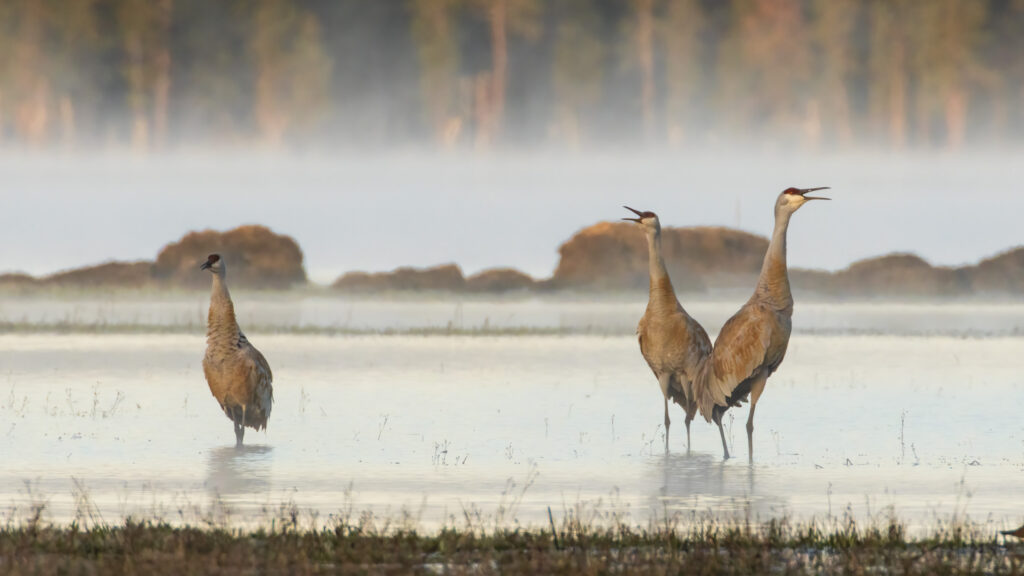
I’ll close with sandhill cranes, which are among my favorite migratory visitors to this area…..
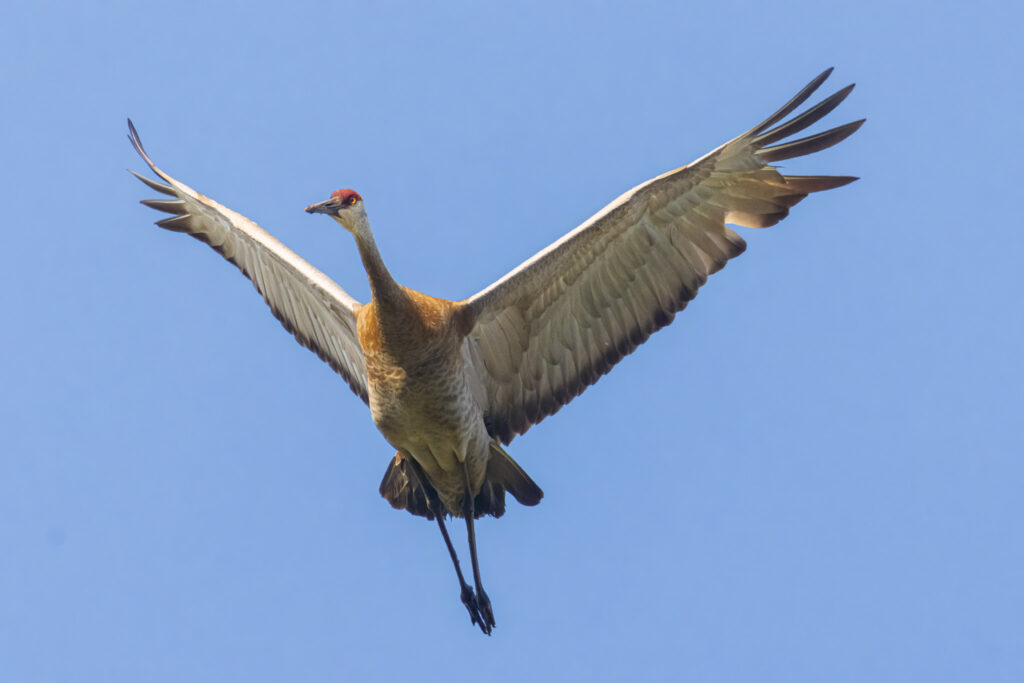
An adult sandhill crane flies overhead against a clear blue sky at Kyburz Flat in Sierra County, California, its broad wings fully outstretched to reveal layered gray and brown feathers glowing in late-afternoon sunlight. The bird’s long neck is extended forward, red crown visible, and its legs trail behind in a streamlined posture. Warm light accents the subtle mottling on its body and the elegant curvature of its primaries, capturing a moment of poised, powerful flight as it turns away from a pair of cranes calling from the marsh below.
Two sandhill cranes stand in a marsh at the Honey Lake Wildlife Area in Lassen County, California, both vocalizing as warm early-morning light illuminates the reddish grasses around them. The crane in front stretches its broad gray wings outward in an expressive display, revealing layered feathers and a hint of its large wingspan, while the second crane stands just behind with its beak open. Shallow water, dense reeds, and soft golden tones create a vivid wetland backdrop highlighting their alert, animated posture.
Three sandhill cranes calling at McCoy Flat Reservoir, Lassen County, California, standing in shallow water with fog-draped conifers behind them

Until next time, get out and enjoy nature!

Scroll to Top