National Wildlife Week 2026

First proclaimed by Franklin D. Roosevelt in 1938 National Wildlife Week promotes the preservation and protection of wildlife across our land. Over the years the event has been chaired by such famous people as Walt Disney, Bing Crosby, and Shirley Temple and introduced the iconic cartoon character Ranger Rick in the 1950’s.

Each year, the event selects a theme to focus on, with this year’s theme being “Color Me Wild,” focusing on how animals use color for communication, safety, and attracting mates.

I think it a good time to share a few more of my wildlife images focusing on some of these uses of coloration.


The fawns of many deer species, including our local mule deer have spots to aid in camouflaging them from predators. That said, it wasn’t working well in this field of green as these two squabbled over just exactly WHICH grass was the greenest. Fortunately, there were no apex predators milling about on this late spring afternoon…
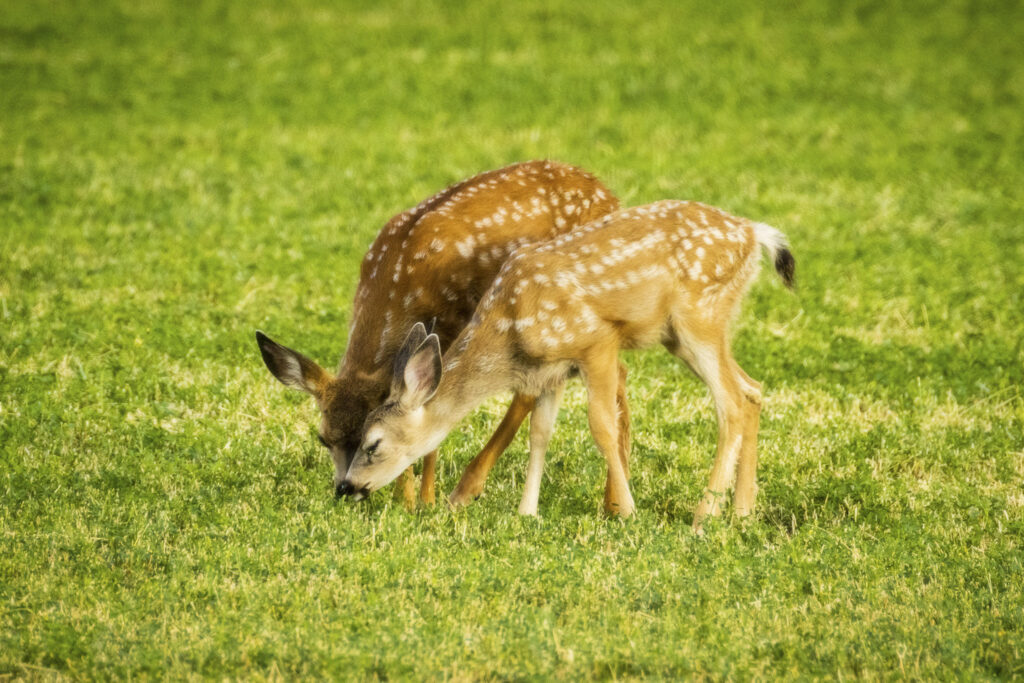
Two mule deer fawns with bright white spots graze side by side in a lush irrigated field in Janesville, California, their small heads lowered as they nibble the grass. The afternoon light warms their tan coats and highlights their delicate legs, soft ears, and the overlapping, almost mirror-like posture that suggests a brief sibling rivalry brewing. The vibrant green backdrop emphasizes the contrast between the young deer and the uniform field, capturing a calm moment just before one fawn delivers a playful kick.

Coyote coloration is also largely for camouflage, although in their case it is to help them be the hunter rather than to protect them from being the hunted. I may not have seen this mature example in the northern Nevada high desert had it not run across the road in front of me so I knew it was there. Even knowing it was there, it took me several seconds to spot….
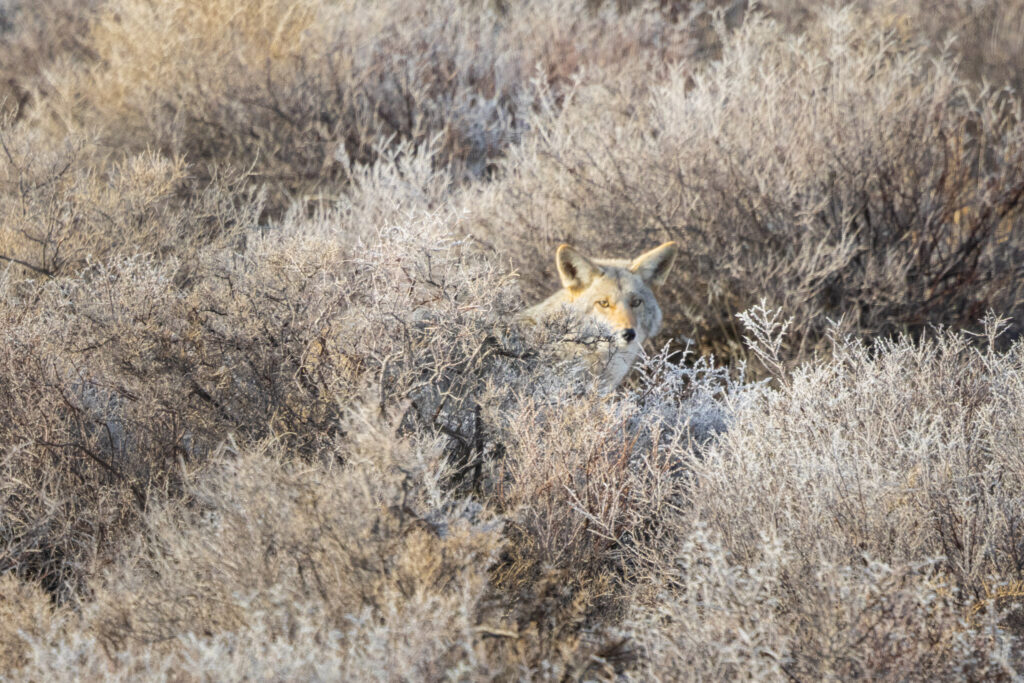
Coyote pausing in frost-covered sagebrush scrub near the California-Nevada border, January morning

Many birds, especially the male of the species, can be very vibrantly colored, especially in mating season. A few examples….

The mountain bluebird, seen here atop a post on Kyburz Flat in Sierra County California….
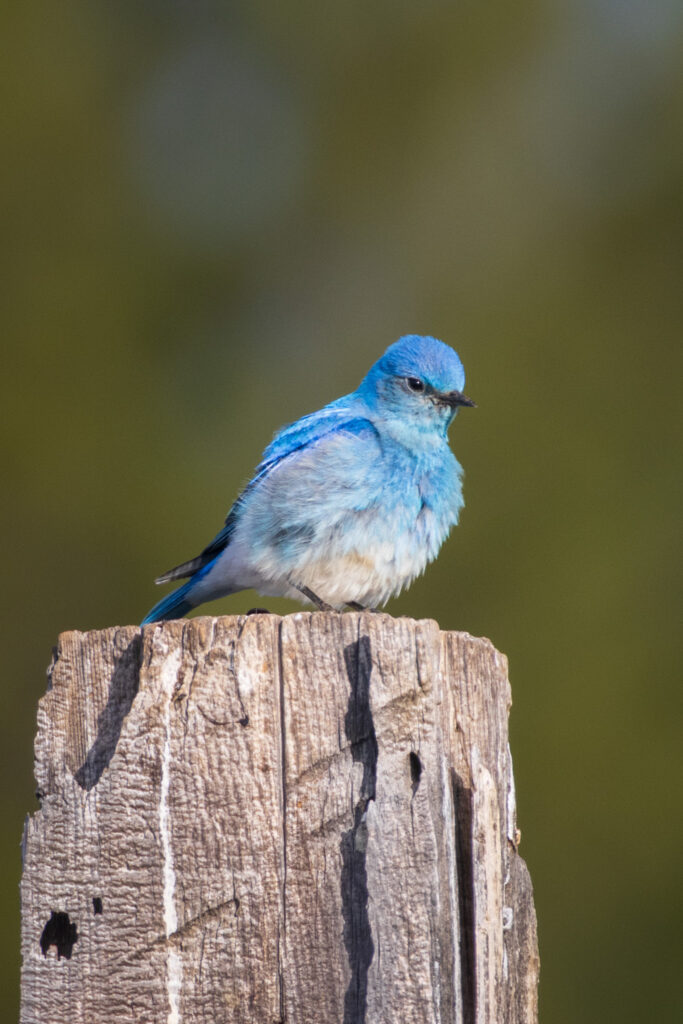
A male Mountain Bluebird perched on a weathered wooden post, its soft sky-blue plumage glowing in the afternoon light. The bird faces slightly left with fluffed feathers, set against a smooth green backdrop that emphasizes its delicate coloration and the textured grain of the old post.

His cousin, the western bluebird, seen here on a family ranch in Shasta County California
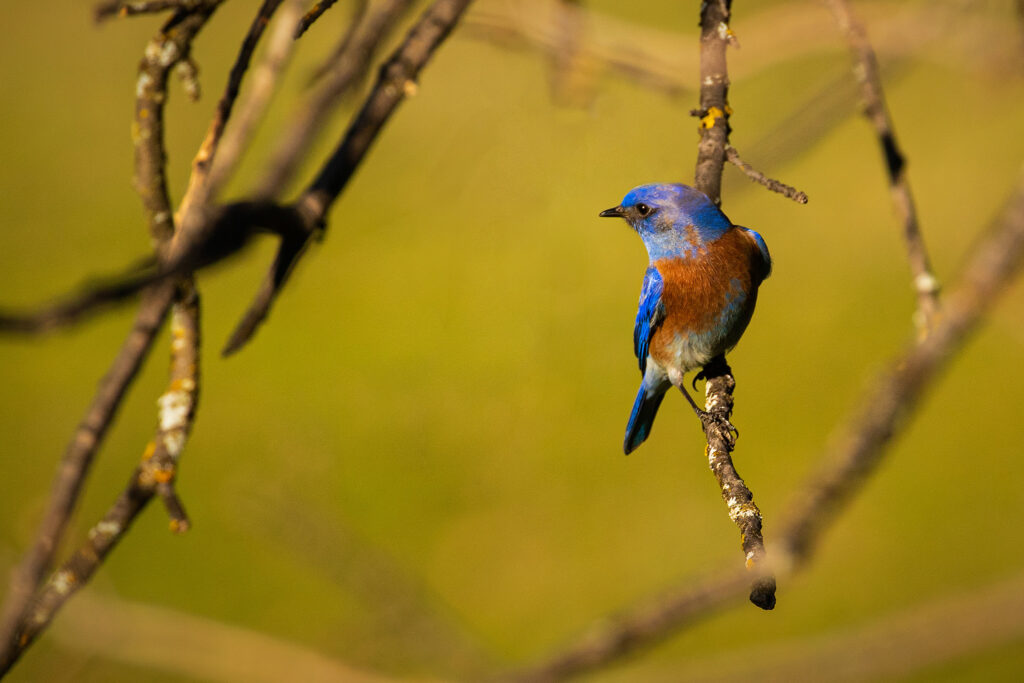
A male western bluebird perched on a bare oak branch in Redding, California, its vivid blue head and wings contrasting with its warm rust-colored breast. The bird faces right, alert and watching the grassy ground below for insects or grubs. Soft, warm light gives the scene a springlike feel despite the winter season, while the blurred green background isolates the bluebird and the textured oak limbs, emphasizing its colors and its poised, searching posture.

The lesser goldfinch, this one in the crab apple tree in our yard on a spring afternoon…
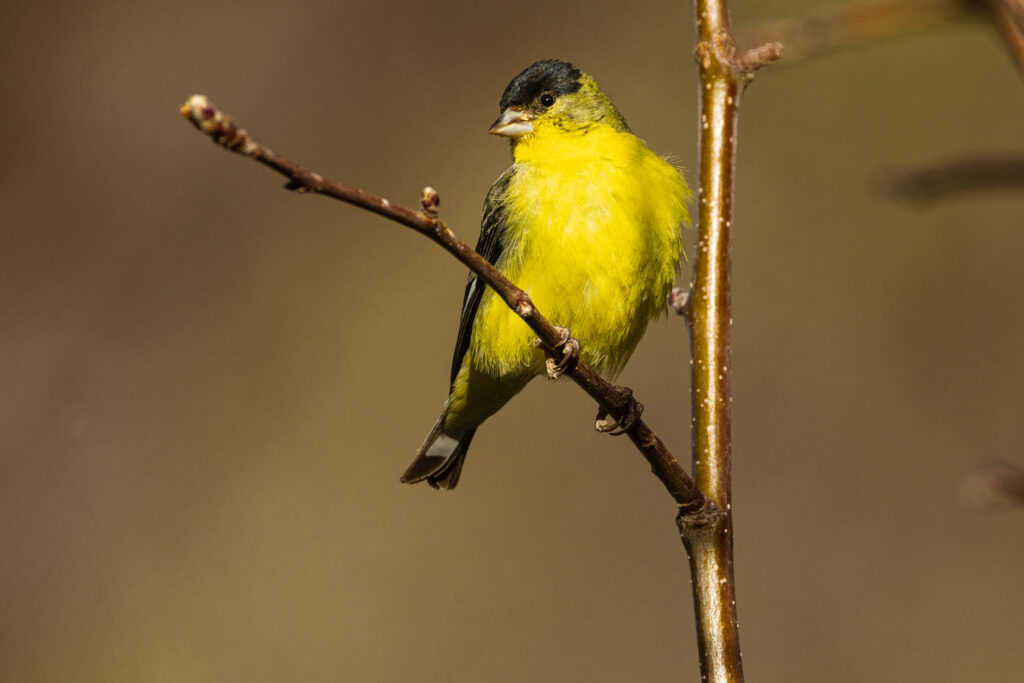
A male lesser goldfinch perched on a thin branch in Lassen County, California, showing bright yellow breeding plumage that contrasts with his dark cap and olive-tinged back. Soft, even light brings out the fine feather texture as he grips the twig, set against a smooth brown background that isolates the bird’s vivid spring coloration and alert posture.

The absolutely stunning western tanager, seen here a few miles up the road from my home base, near Thompson Peak on the Lassen/Plumas County line
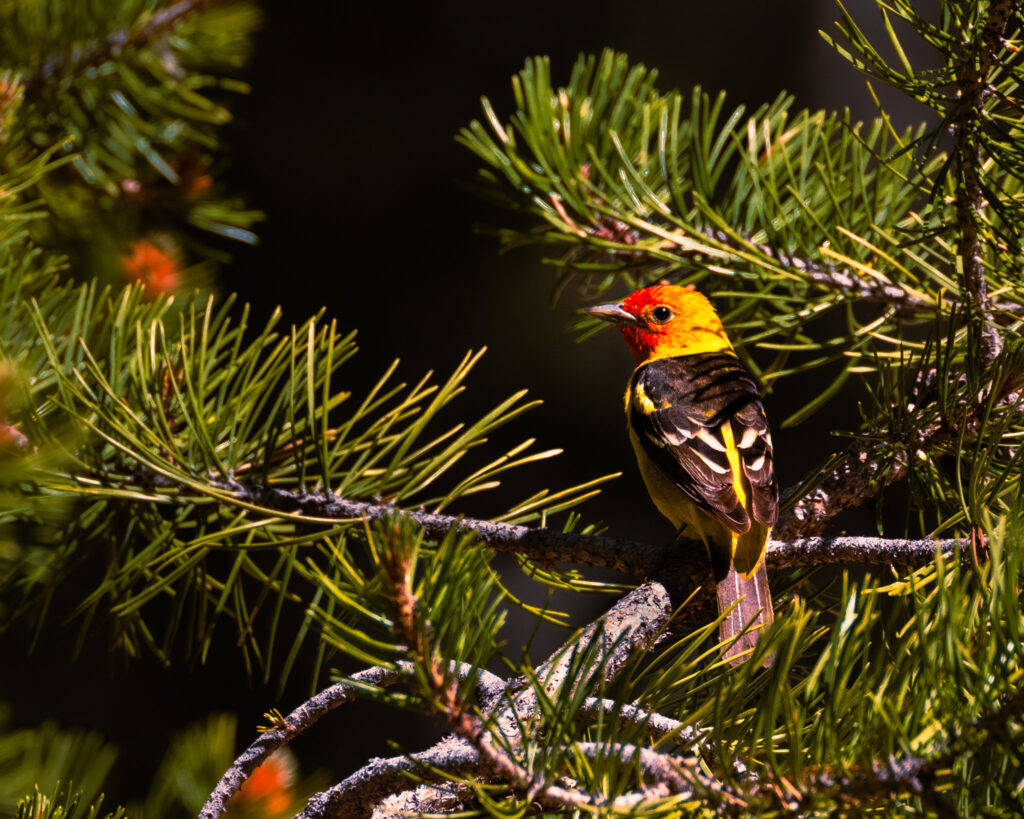
A male western tanager perched on a sunlit ponderosa pine branch near Thompson Peak on the Plumas–Lassen County line in northern California. Its bright yellow body, bold black wings, and vivid red-orange head stand out sharply against the deep, shaded forest background. Pine needles frame the bird on both sides, their green tones contrasting with the tanager’s saturated breeding colors. The bird faces right, alert and still, creating a crisp, colorful portrait in its mountain woodland habitat.

And finally, the ringneck pheasant rooster. This one was nice enough to actually stay still long enough for a photo when I spotted him on a “strain post” adjacent to a Lassen County ranch on a frosty morning recently, just after the sun crested the hill to camera left, casting lovely warm light on his vibrant plumes…
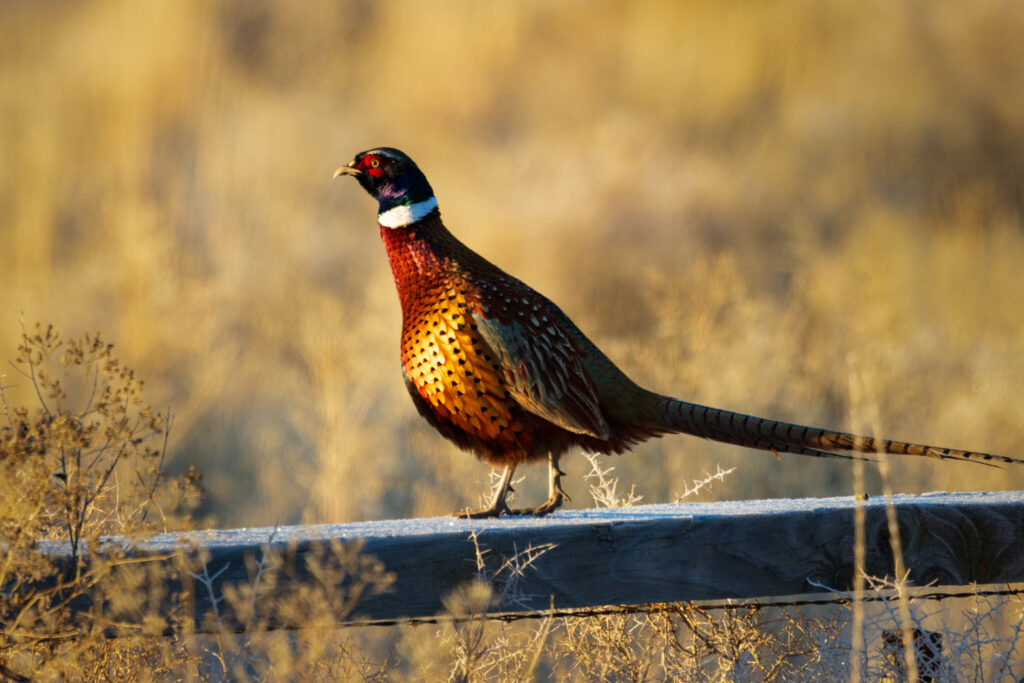
Ring-necked pheasant rooster perched on a frost-covered fence rail in morning light, Janesville, California

As usual, thank you for stopping by. Get out and enjoy nature!

Scroll to Top