Since 2020, April 3rd marks World Aquatic Animal Day, courtesy of the Aquatic Animal Law Initiative and Animal Law Clinic at Lewis and Clark Law School in Portland Oregon. The initiative focuses on law and policy and general awareness for the protection and preservation of fish, mollusks, crustaceans, aquatic birds and more.
I think this is a good occasion to share some of my images of aquatic creatures. As a northeastern California resident, I certainly see and photograph more of the fresh water variety of such animals but I do occasionally find myself in a coastal environment as well.
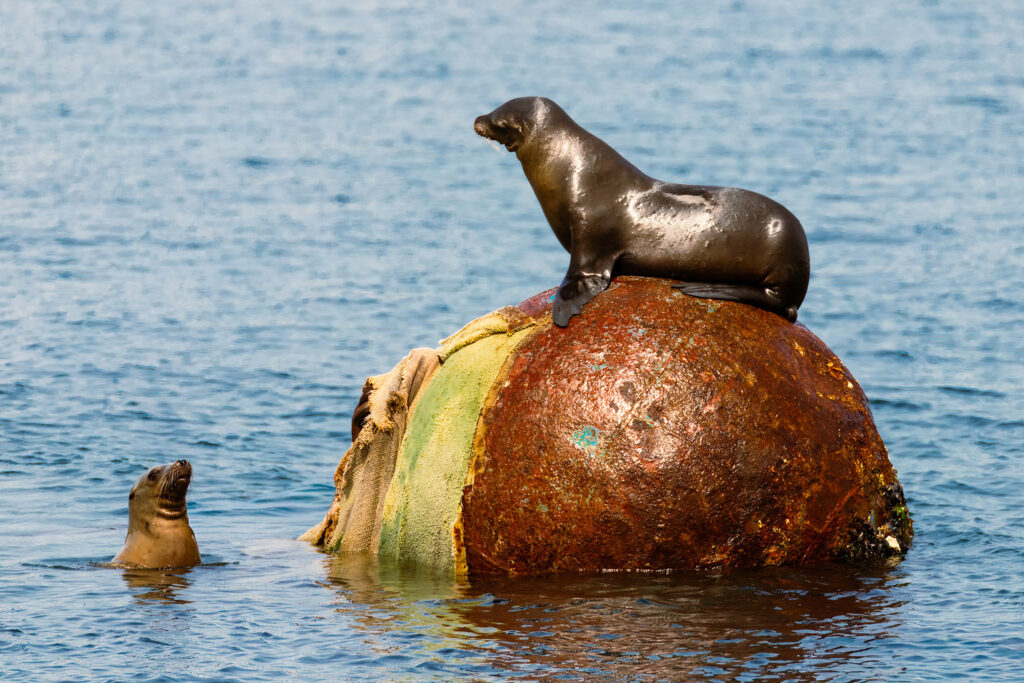
While waiting for our boat to depart on a whale watching cruise in Monterrey California, I spotted quite a squabble over one of the buoys in the harbor as several Sea Lions were vying for “King of the Mountain” atop the buoy. I grabbed this shot of the “king” of the moment preparing to ward off the latest invader as we cruised by on our way out into the bay.
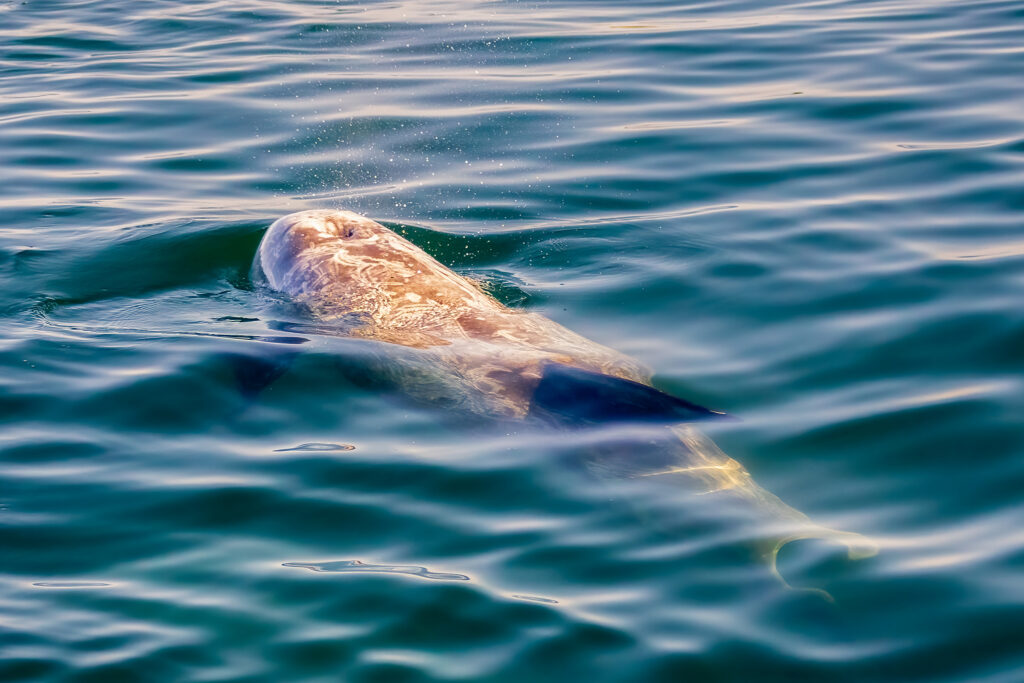
Later on the same boat ride we were blessed to see a good sized pod of Risso’s dolphins alongside our boat. I captured this frame as one of the majestic creatures came up for a breath. These are fascinating animals, diving to great depths (up to 2000 feet!) in search of prey, such as squid, octopus, and cuttlefish. The “graffiti” you see on the body of this one is scarring that is often caused by fighting with other dolphins and a social interaction known as “teeth raking”.
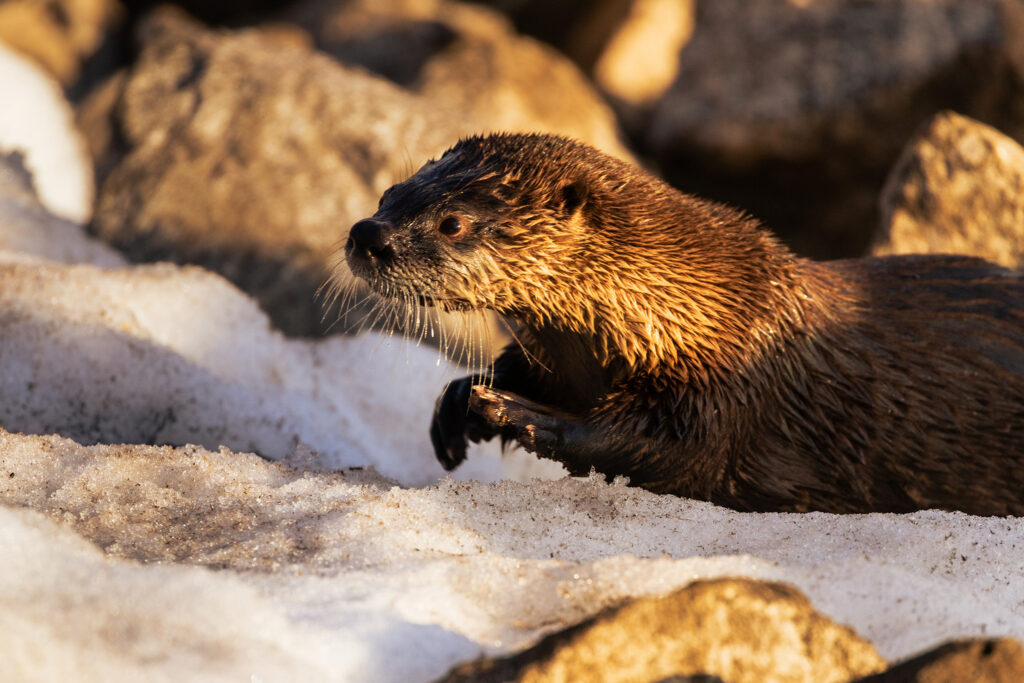
In 2022, I was fortunate enough to know there was a group of river otters hanging out around a patch of clear water in the mostly frozen part of Lake Almanor near the Highway 36 causeway. I was sitting on the side of the causeway when this “water weasel” came ashore about as close as I want one of the toothy creatures to get to me (although not as close as this may appear as I was using a telephoto lens). I captured this frame right at it emerged from the water in the golden light of the late afternoon.
Of course, far and away the most common aquatic animals I see and photograph are waterfowl. Among those one of my favorites is the western grebe. They are abundant in my “home” waters and I find them quite fascinating, especially their amazing mating rituals.
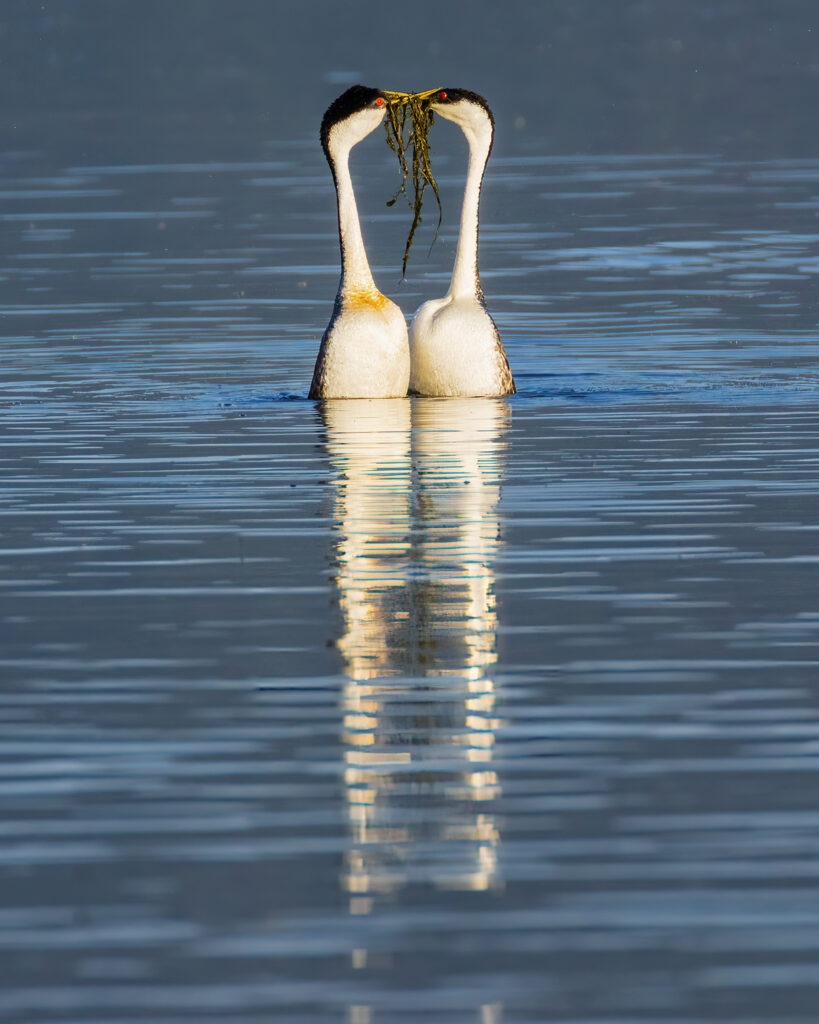
Early in their mating process they engage in the weed dance or weed ceremony. A prospective pair will dive, grab some aquatic vegetation, raise their bodies high out of the water and gracefully display their find to each other such as these two at Eagle Lake…
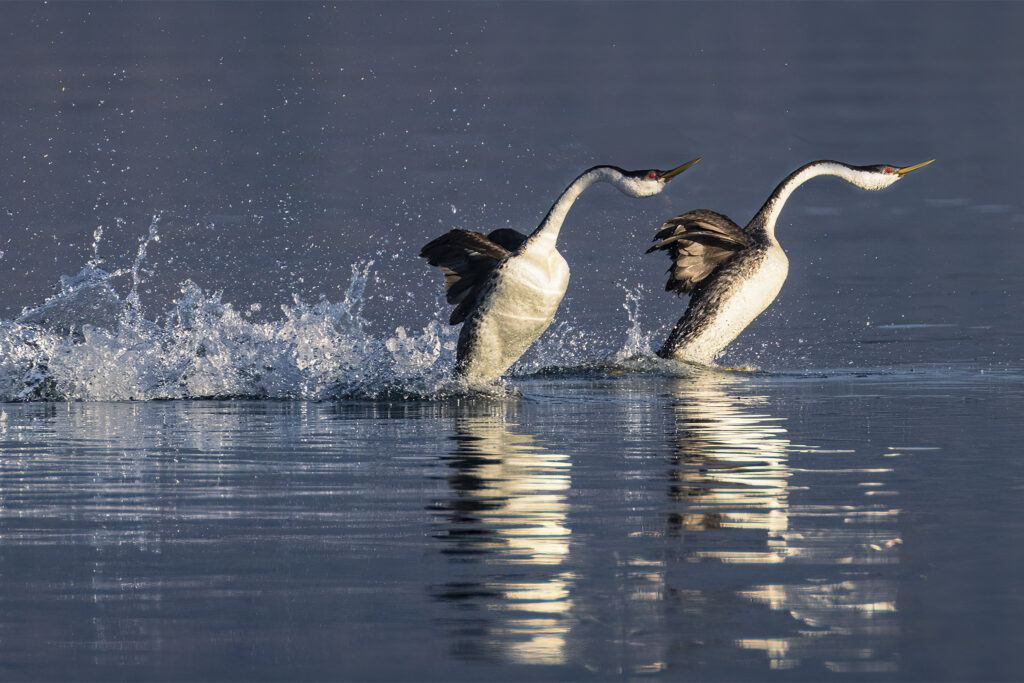
Probably the most well known part of their mating process is the rush. A pair (and sometimes two competing males and a female) will run for quite a distance, quite often more than 50 feet, on the surface of the water before diving in unison such as this pair, also on Eagle Lake…
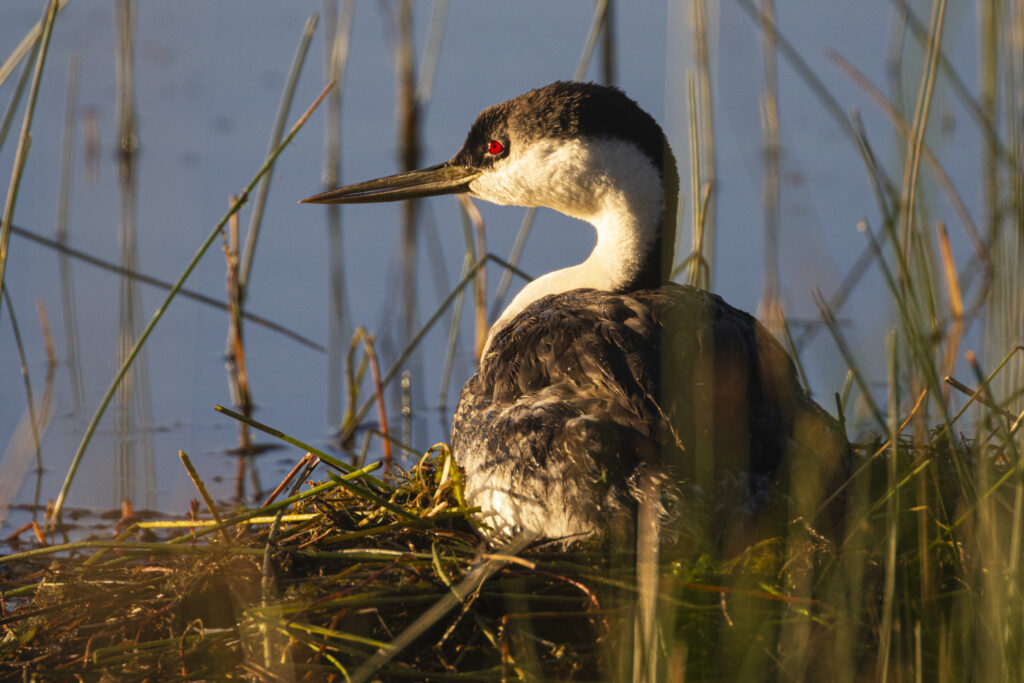
After the birds pair up they build very sturdy nests from and atop of aquatic reeds where they’ll lay their eggs – up to 7 but generally 2 or 3 – and take turns incubating them, such as this one at a rookery on Antelope Lake…
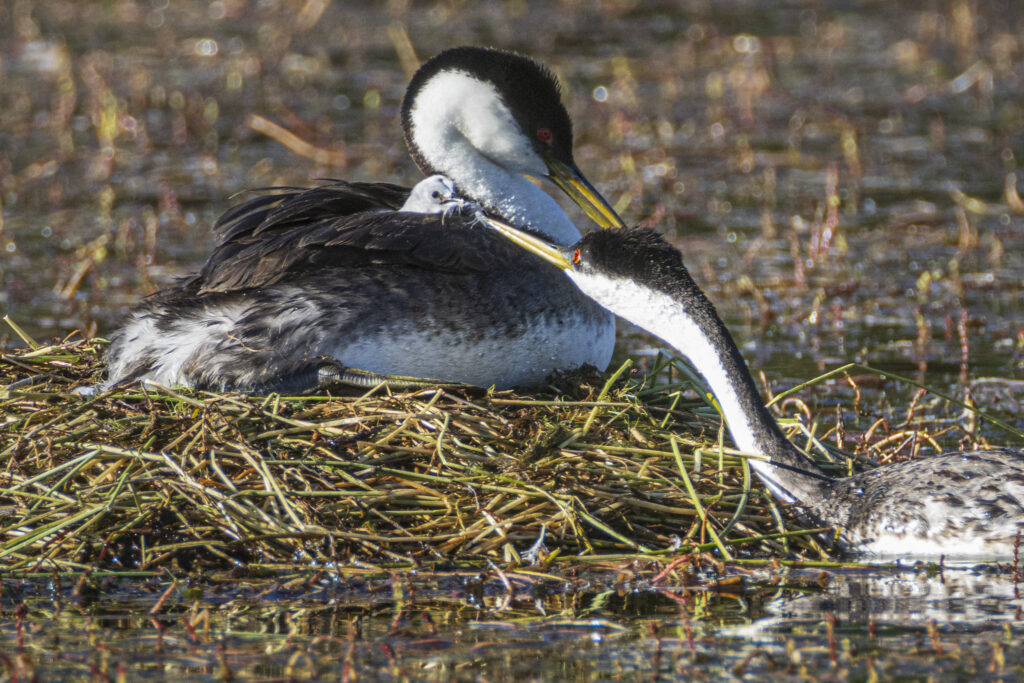
If all goes well, their chicks ultimately hatch and take up residence in the feathers of their parents who keep them safe and fed. Part of this process involved feeding them feathers that the parents either pick up or actually pick from themselves. There’s some dispute over why this happens but it’s fascinating to watch…
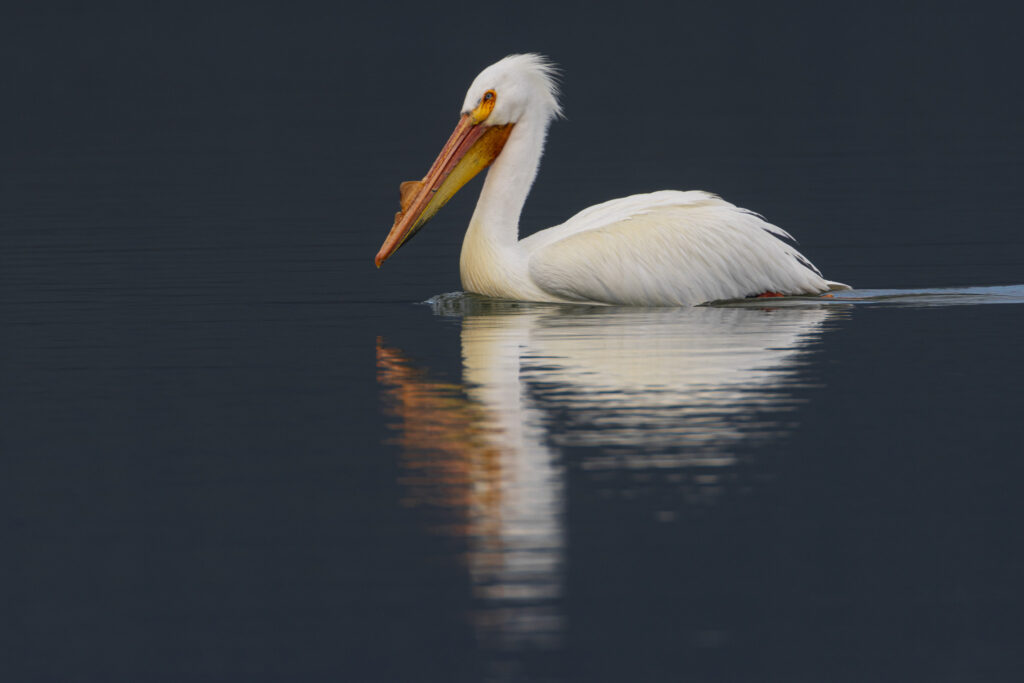
Another amazing local water bird is the American white pelican. With a wingspan often exceeding 9 feet and a body weight of up to 14 pounds, they are impressive to see up close…
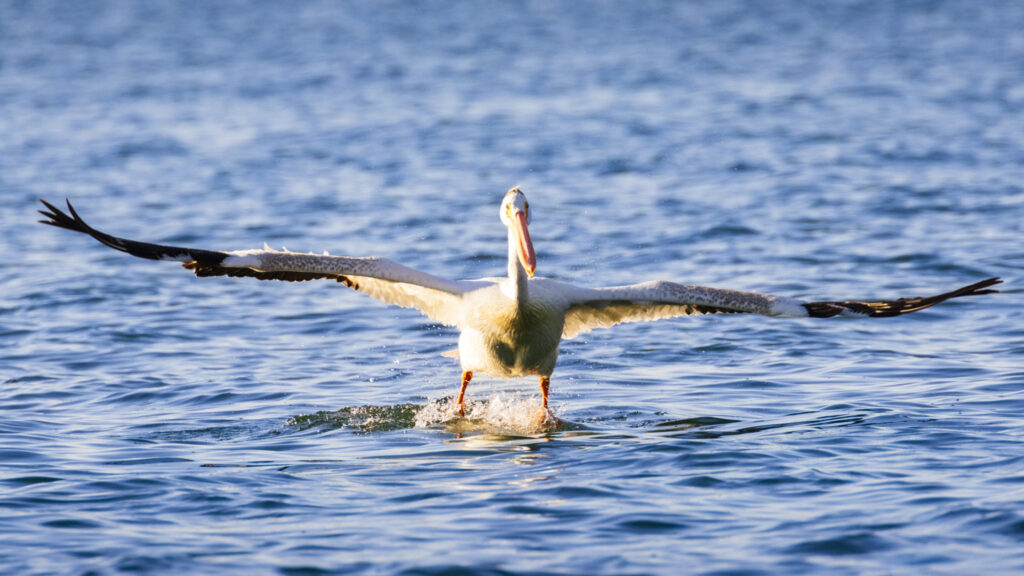
The pointed horn-like protrusion on this one’s beak is known as a caruncle or nuptial tubercle and indicates that it was photographed in mating season. The caruncle is later shed….
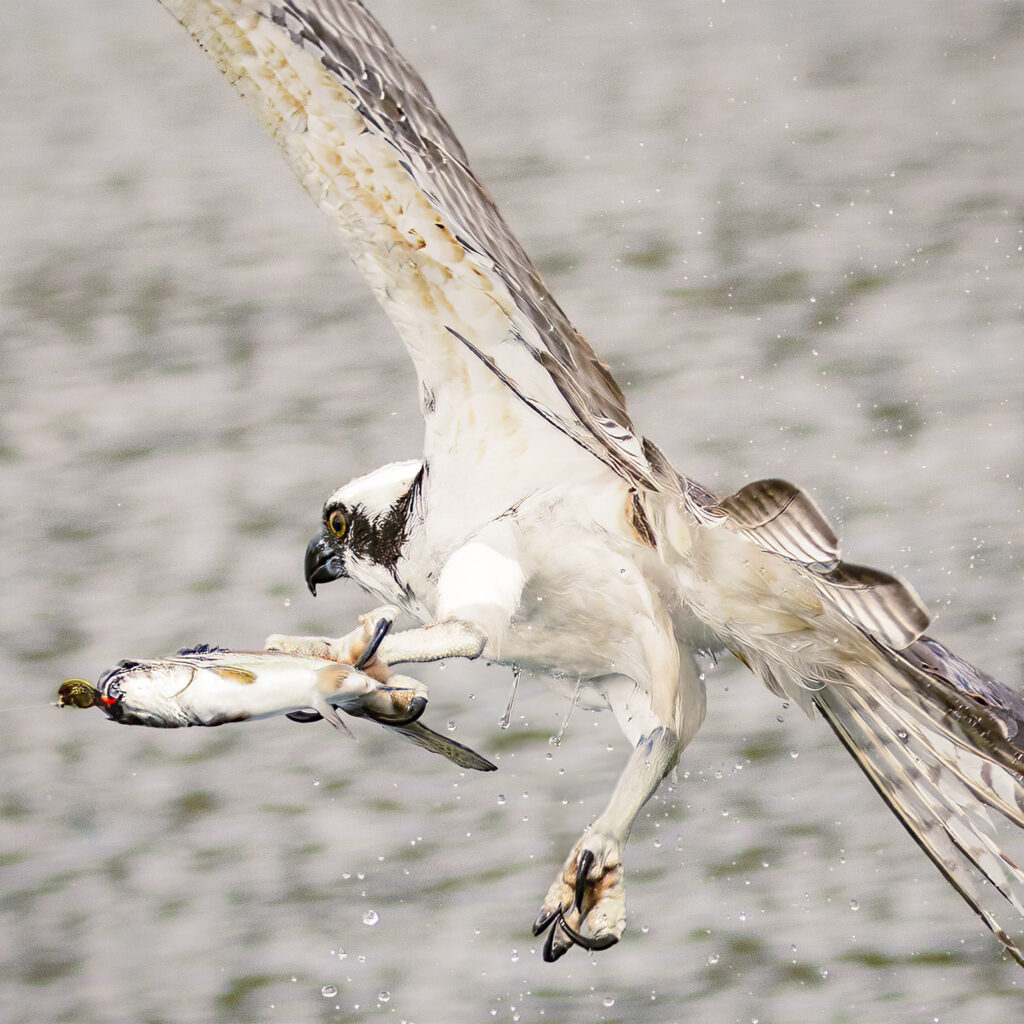
I could go on and on but I’ll close with one of my favorite raptors, the osprey. Very adept at catching fish, with approximately a 70% success rate, they are amazing to watch as they ply their craft in waters all over the world. This one got a bit more than it bargained for as it tried to take a fish my son had already laid claim to at Baum Lake in Shasta County California. The osprey quickly figured out that the fish was harder to lift than expected and dropped it to go find easier prey and the fish was ultimately released after its crazy ride.
I was honored with the People’s Choice Award in the 2022 California Trout “Fish, Water, People” photo contest for this capture.
Thanks for visiting. Get out and enjoy nature!