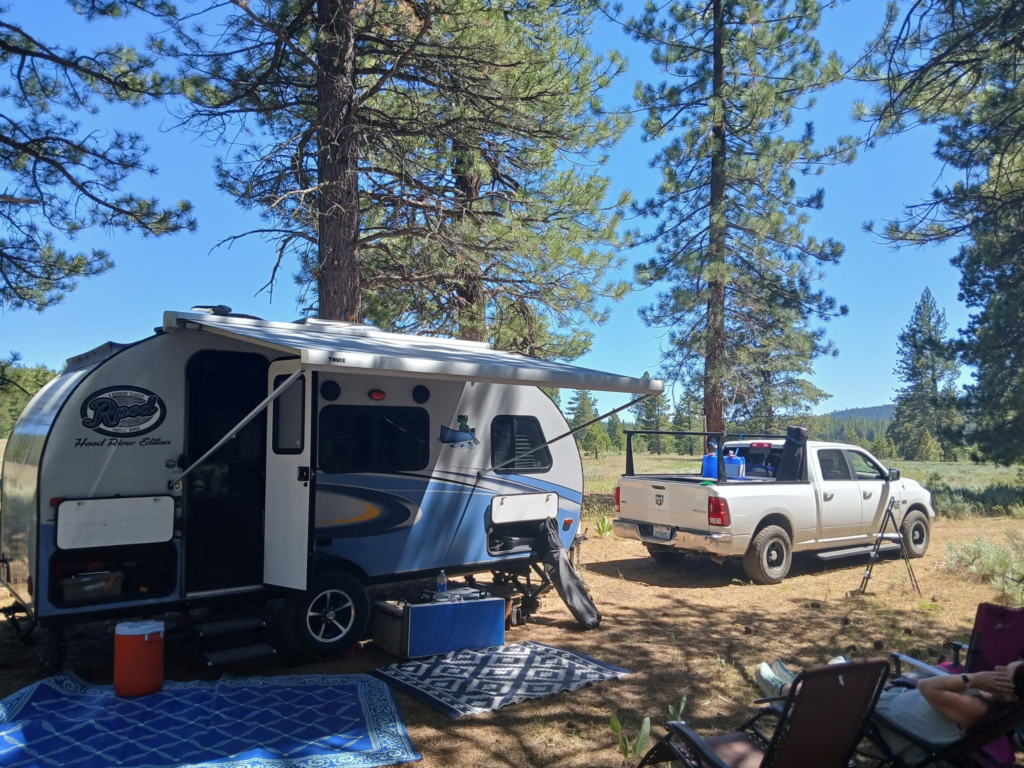
Last Thursday my lovely bride and I set up camp at Kyburz Flat in Sierra County California for a 3 night stay. We picked up her granddaughter from school on Friday afternoon to join us for the weekend. If you like to birdwatch you could do much worse than this location in the spring and early summer. There is a large open marshy area and large bit of grassland with sage brush, etc, butting right up against some mixed conifer woodland so there is great diversity in birdlife there. We got a nice spot right where the woods start to give way to the open grassland ….
One of the first stops for me was a nearby lodgepole snag containing many nest holes that I found last year. I could hear activity in one of the larger cavities but didn’t see anyone coming or going in several minutes of casual observation from a distance. Therefore, I set up a mini-trail cam overnight on the nest, which confirmed what I thought – it was a northern flicker nest. (I’m sure the juvenile red-tailed hawk in the last clip was just dropping in to make sure everyone was ok 😂)…
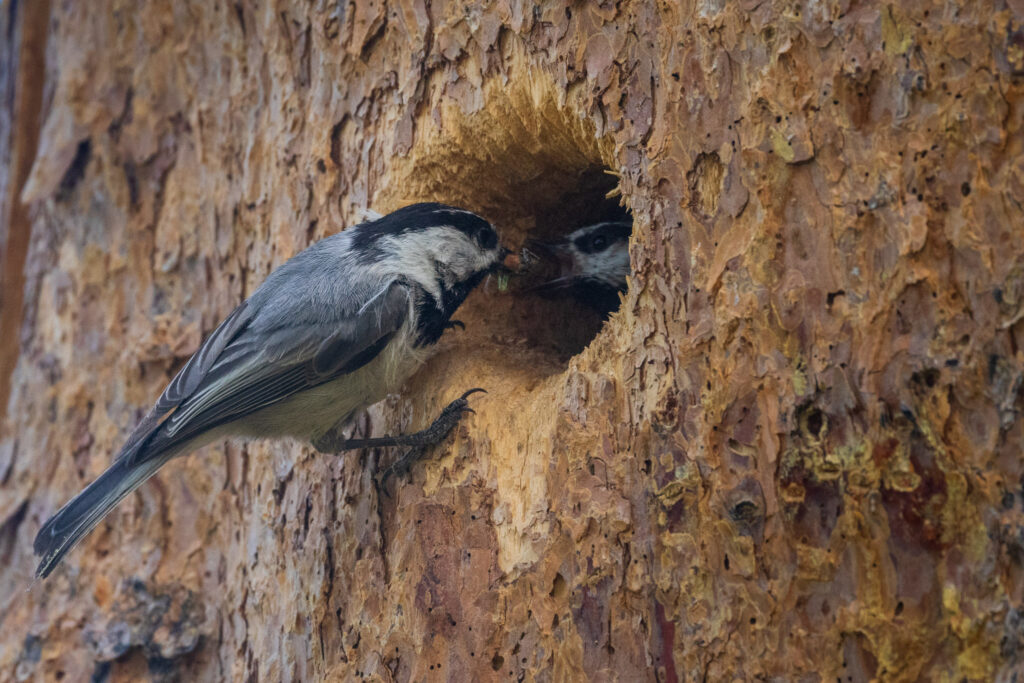
On the other side of the snag was a smaller hole that was in use by a pair of mountain chickadees. These fun little birds are much less skittish than the flicker. It also appeared that the male was feeding whole insects to the female in the nest. This made for much more frequent visits and opportunities than I would have for the flicker which is a regurgitation feeder and therefore stays away from the nest for much more prolonged periods. The little chickadees were fun to observe. He would land in a near-by tree and call out to her and she’d come to the opening to get a meal from him…
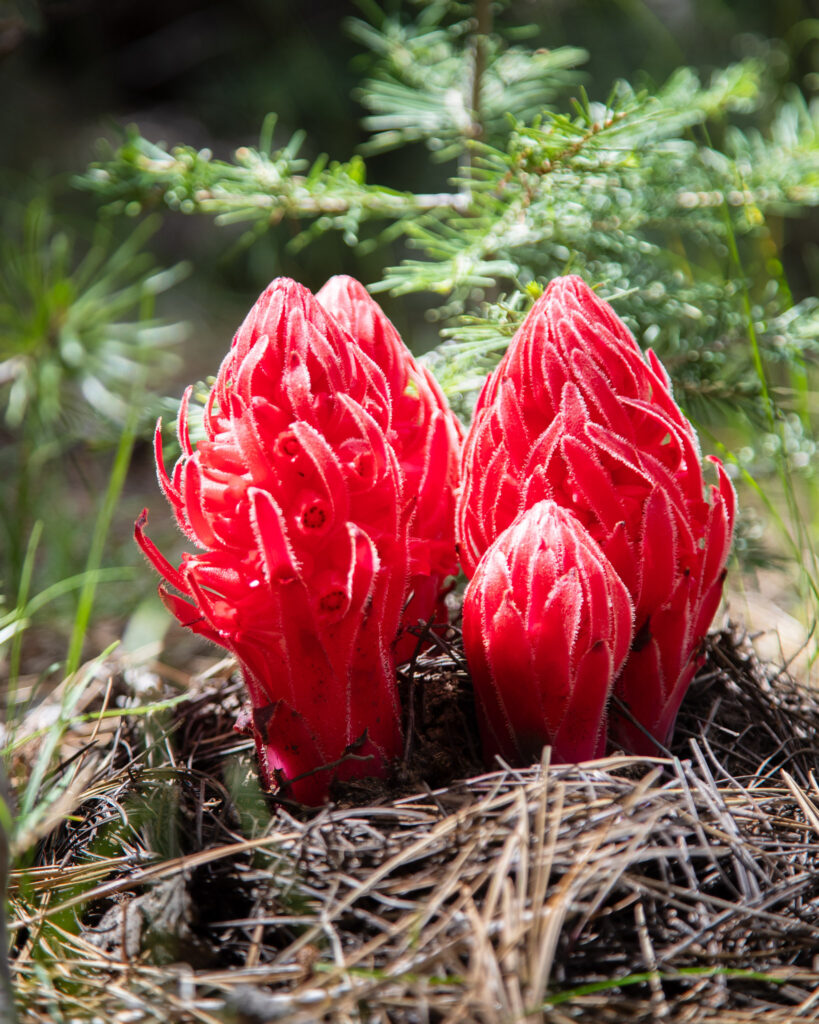
In addition to all the birds and wildlife in the area, it’s just generally a beautiful place to enjoy the scenery. While we were there the wildflowers at high elevations were blooming nicely. I didn’t shoot many flowers (shame on me) but my wife spotted this very nice specimen of a snow plant. I’d been wanting a decent image of one of these very unique plants for a while. I see them very frequently in my travels around the northstate but they’re usually past prime and/or in less than photogenic locations when I spot them. This one was still in nice fresh condition – the bracts were just beginning to give way to the tubular blossoms – and it was in a pretty little setting with a fir seedling and some needle litter…
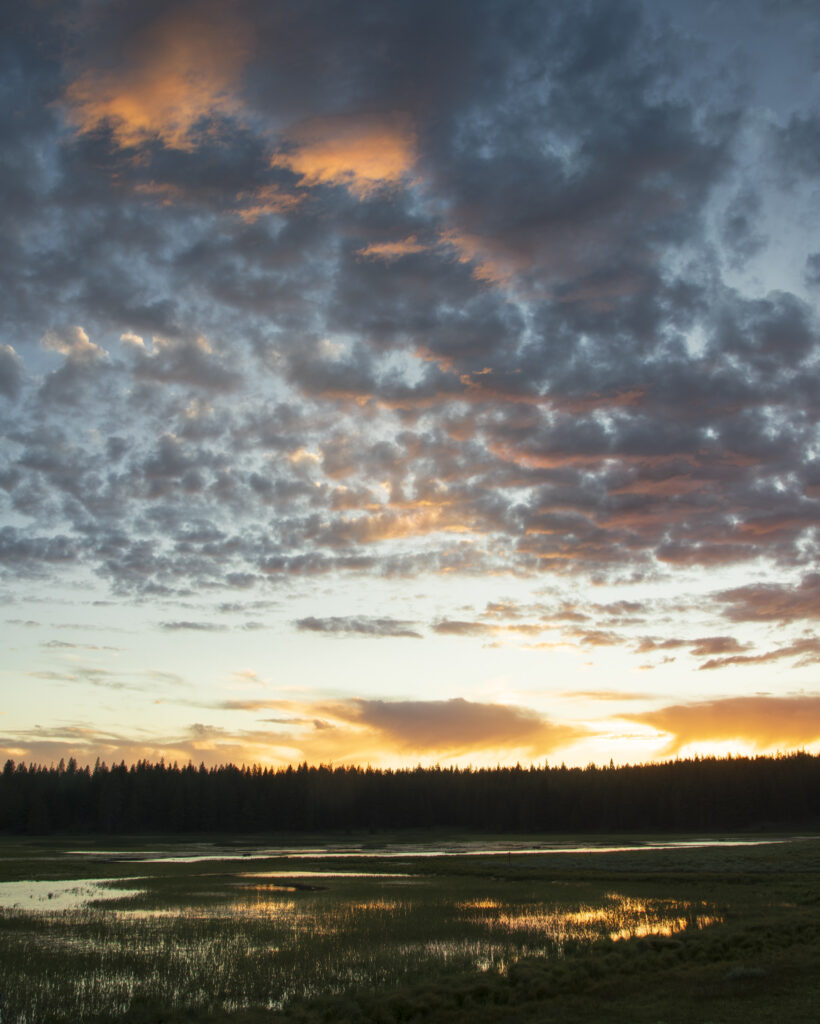
Conditions looked promising the second evening for a sunset so I headed down by the marsh. I wasn’t very impressed with what I saw from the shoreline so I got up on the rock mound that’s out there – it is about 10 feet high or so and I’m not sure if it’s a natural occurrence or something piled by humans a long time ago – it’s odd that there is just one random pile of rocks though. In any event, it helped my photography as I was able to get a bit of a “vista” including a bit more of the marsh and reflections. I shot a horizontal/landscape oriented image as I planned but the way that gap in the distant clouds was allowing the sun to sort of beam through to higher points in the sky I rather liked what I was able to do in a vertical/portrait orientation…
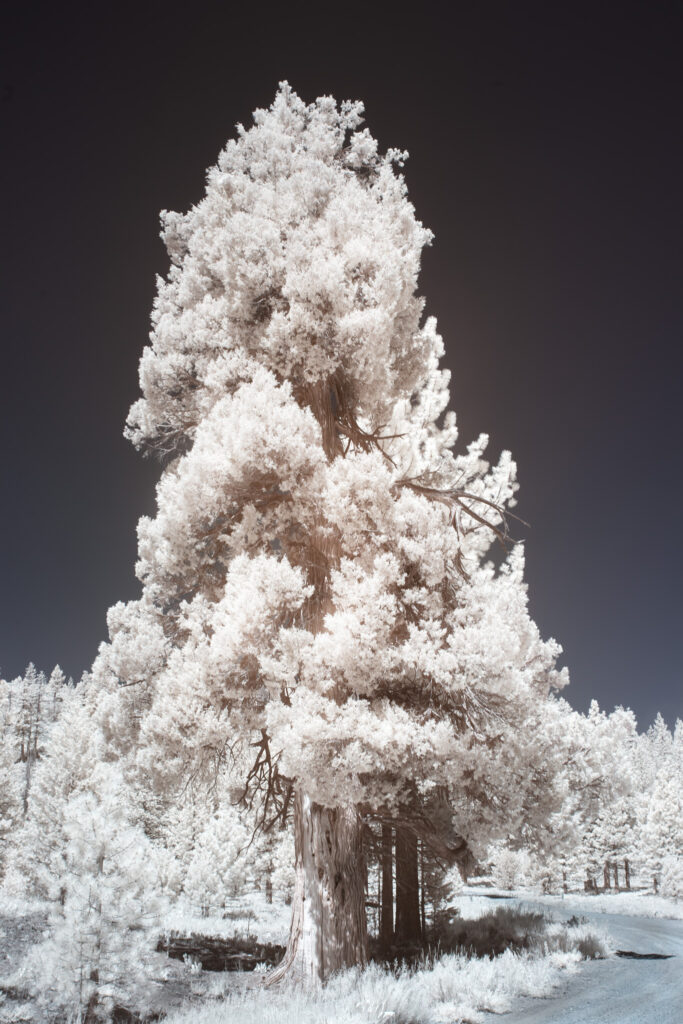
While out driving around we spotted this rather large Sierra juniper. These trees live to be thousands of years old (if you believe Wikipedia, they are the 4th oldest living organisms on Earth). I did a bit of poking around and this one is not super famous outside the local area and there is some obvious misinformation out there claiming it is 23 feet DBH (Diameter Breast Height) but that can’t be true – the General Sherman giant sequoia is 26 feet DBH and it is a significantly larger tree. That said, this one is still an interesting specimen given that it is quite large and has a single stem trunk which I gather isn’t super common once these trees get large. The mid-day sun said visible light photography wouldn’t be great so I broke out my full spectrum body and 720 nanometer near infrared filter and went to work with it…
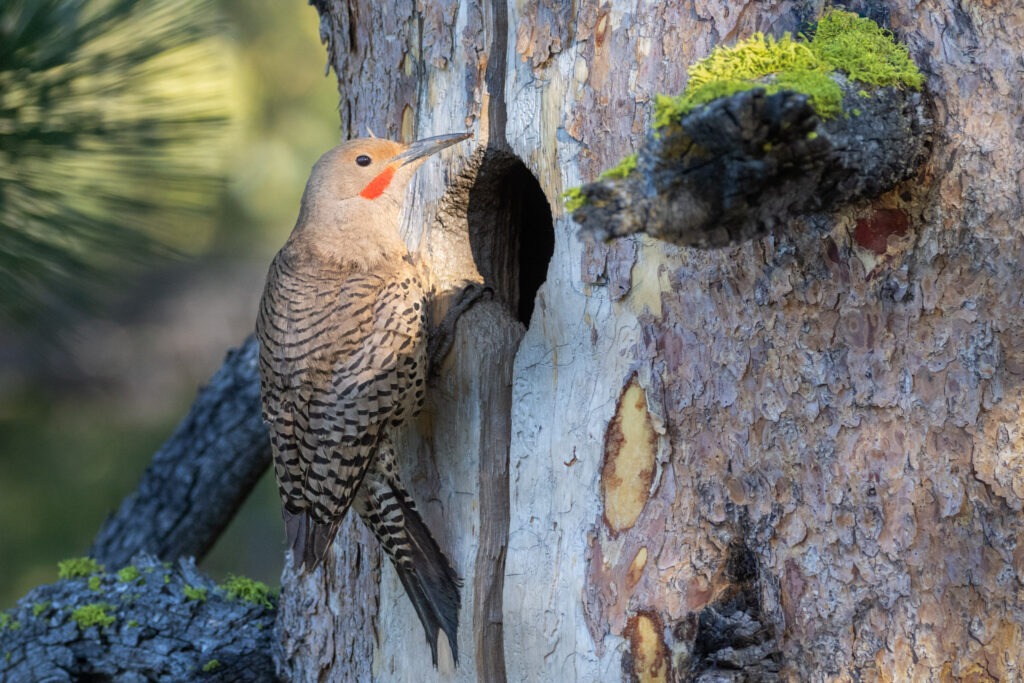
Before I get too long winded I’ll get back to the flicker nest to wrap this up. I have been wanting an image of a flicker outside a natural nest hole for a while. This one was fairly challenging for several reasons. An obvious reason is that northern flickers are especially timid/wary birds, at least in my experience. Also, the aforementioned regurgitation feeding and prolonged absence from the nest is a definite test of patience (not my strong suit). Finally, in this case lighting was a challenge. The nest is in deep shade the vast majority of the time. However, there were brief moments in mid-mornings when some warm dappled light sneaked through the trees. The real challenge was to get he bird to show up when that light was “dappling” properly. I spent at least 3 hours standing next to a nearby sapling with camo netting over myself and my tripod and watched that light just miss a few times. My patience was finally rewarded about half an hour before we had to break camp though when the bird came back as the light was on it’s head at the nest. I’m quite pleased with this image…
Thanks for stopping by! Until next time, get out and enjoy nature!