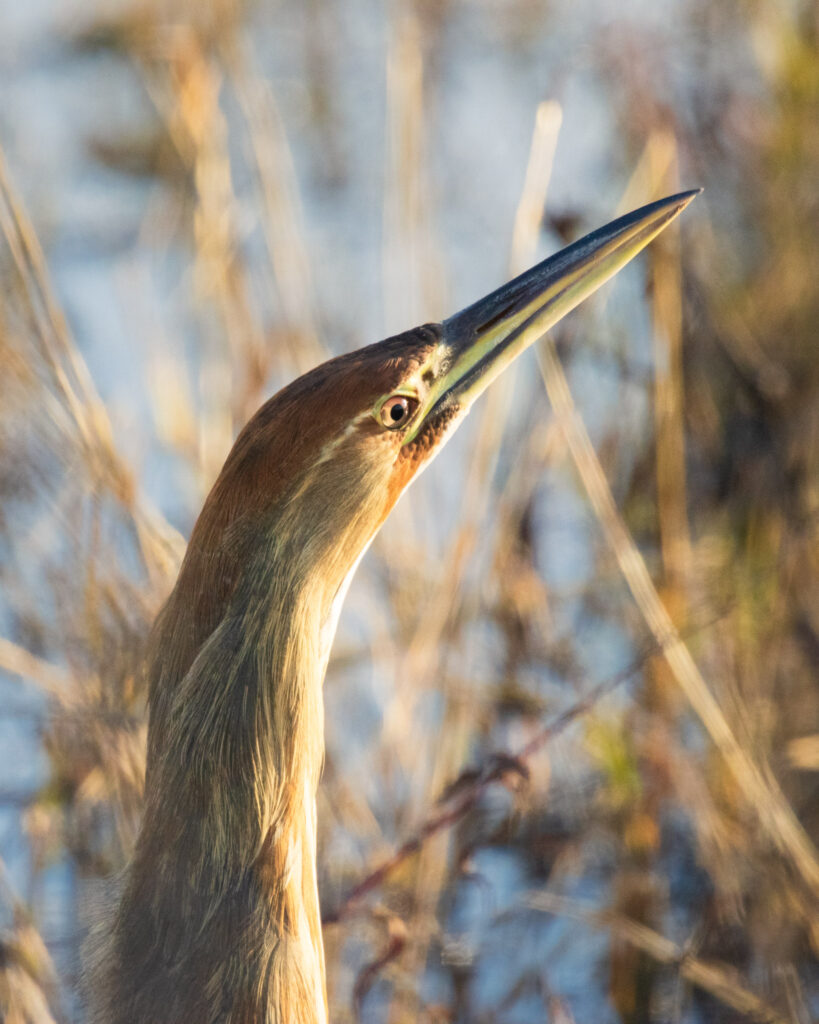
This past weekend my wife and I set up our base of operations in Colusa California at a nice little Air BnB (the Cedar Hideaway – I can definitely recommend it!). We spent most of the day Saturday and Sunday morning on the auto tour of the Sacramento National Wildlife Refuge. Over the course of the weekend I filled a 128GB card with images and, as of this writing, I’m just starting to go through them. Hopefully more posts will be forthcoming. I figured I’d start with one of the more exciting sightings for me – an American bittern. To the best of my knowledge I’d never seen one in the wild before (although given their excellent camouflage, it’s possible I’ve looked right at dozens of them and not known it).
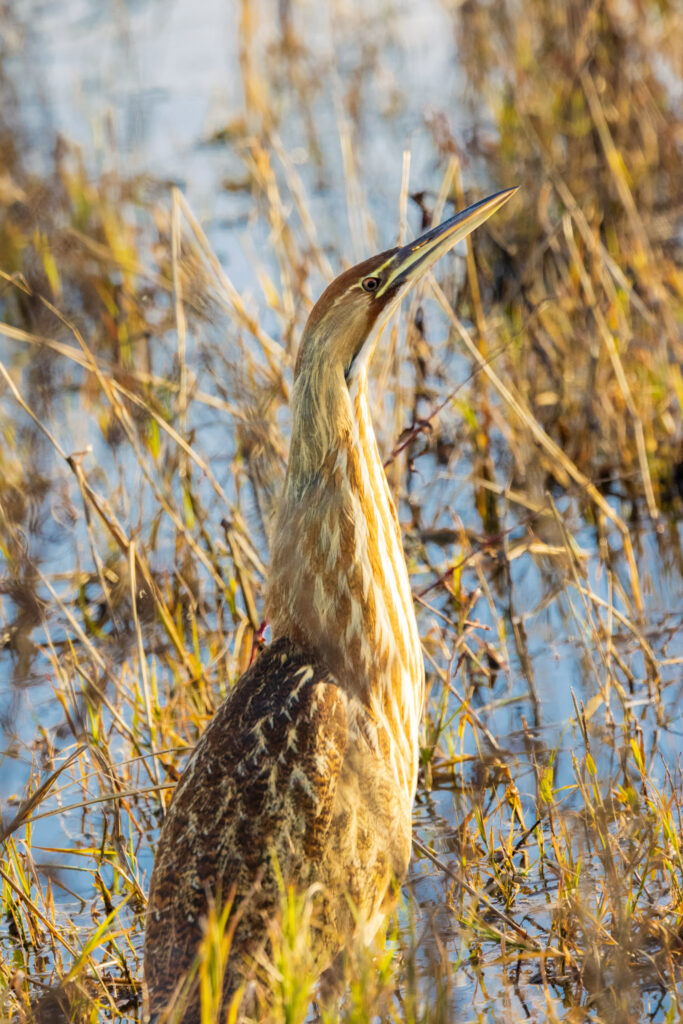
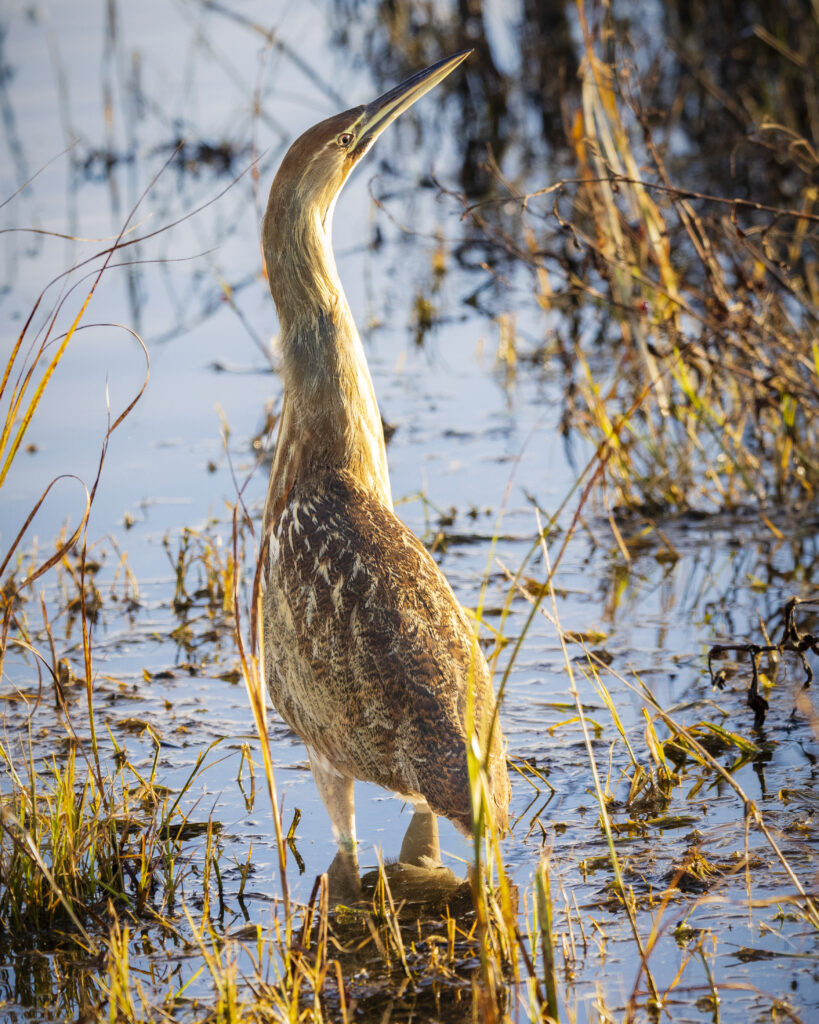
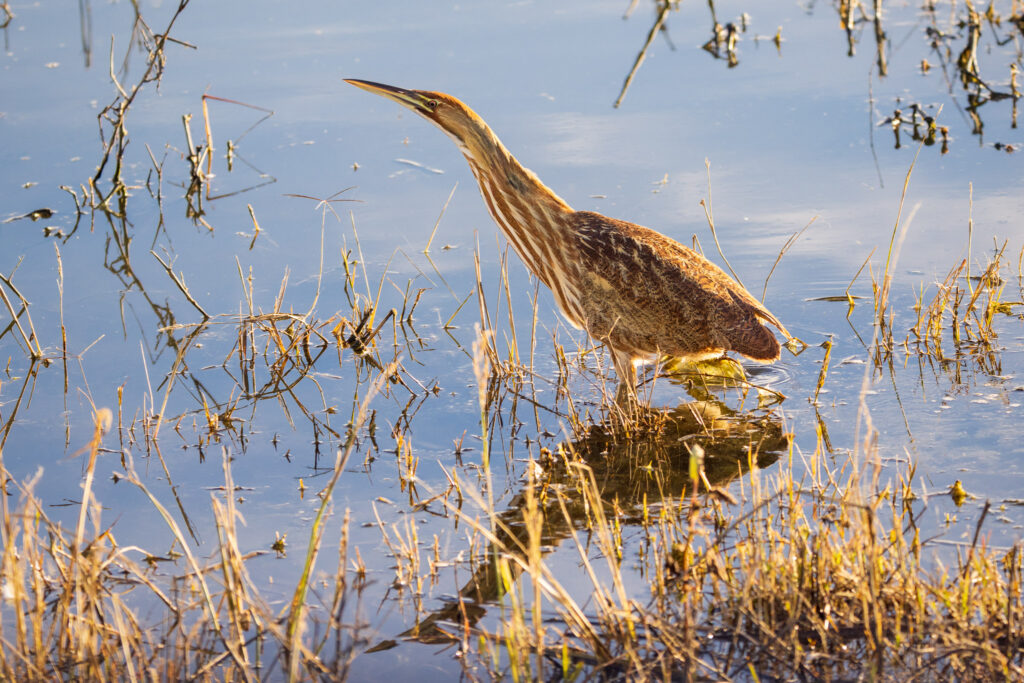
The American bittern is basically the ninja of the marsh. When threatened, it freezes and points its bill straight up, blending in with reeds like a feathery periscope. Its deep, booming call sounds like someone blowing across a bottle—earning it the nickname “thunder-pumper,” although this one was quiet and I’ve yet to hear one that I’m aware of. Despite being a heron, it’s far more secretive than its showy cousins. They hunt by stalking slowly, then spearing fish, frogs, and insects with lightning-fast strikes. Their streaked brown plumage isn’t flashy, but it’s perfect camouflage for wetland life. If you spot one, congratulations—you just beat nature’s stealth mode.
For the trip I rented a Canon RF 100-500 lens along with the 1.4x teleconverter to go on my Canon R7. One issue with this combo is that you can’t physically zoom the lens wider than 300mm when the teleconverter is attached, as it was when my wife spotted this wonderful creature and pointed it out. This resulted in me initially not being able to zoom out wide enough to get the entire bird, which was quite close to our car, in the frame. Therefore, I first grabbed the bird’s “head shot” so I would at least have SOME record of spotting it…
The Sacramento NWR is a very popular attraction that gets a great deal of traffic, especially on the weekends during peak season, which is happening now. I found this to be both a pro and a con. On one hand you really need to bring your patience with you, as not everyone is quite as courteous as I’d like. On the other hand, the birds get very used to cars, and since people aren’t allowed to exit their vehicles over the vast majority of the tour, the birds get fairly accustomed to cars stopping near them. This went well for me, as this wonderful creature was good enough to stay put while I removed the TC and put the lens back on without it to grab more frames.
Hopefully, I’ll have a few more posts to share in the coming days. Thanks for stopping in.
Absolutely beautiful….
Thanks Suezy!